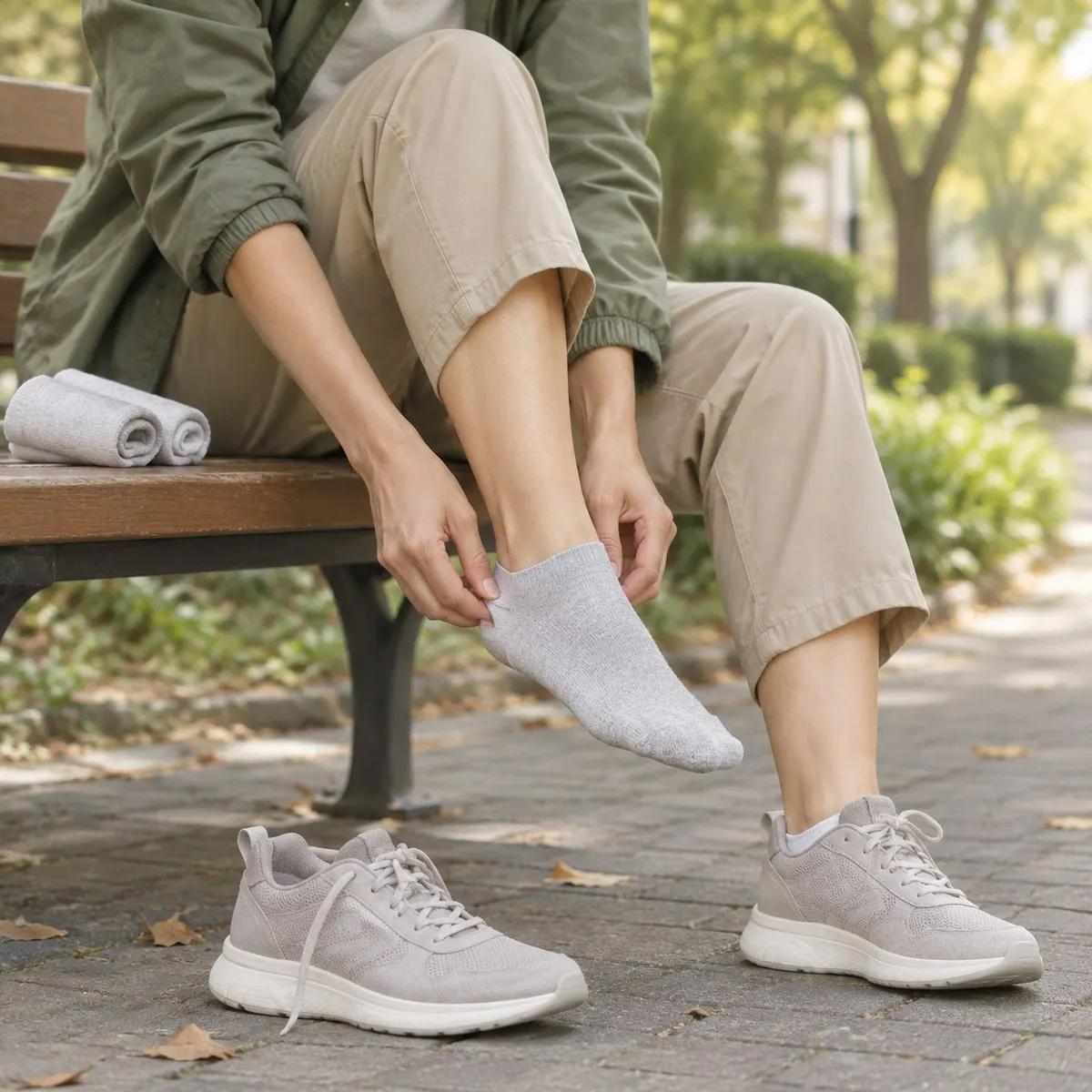
Halfway through a walk, one small spot at the back of your shoe starts rubbing. You can still walk, so it is tempting to finish the route and look later. That moment deserves attention: the American Academy of Dermatology (AAD) advises stopping an activity when skin becomes painful, uncomfortable, or red, before a blister develops. [1]
A rubbing spot raises a different question from an ache deep inside the foot. This guide focuses on friction blisters: how to interrupt the rubbing, protect the skin, and recognize when home care is not enough.
Why one small spot can become a blister
A blister is a pocket of fluid in the outer layers of skin. Repeated rubbing or pressure on one area can cause one, including when a shoe keeps rubbing the foot. But friction is only one possible cause. Burns, skin reactions, and several medical conditions can also produce blisters. [2]
Think back to what you noticed, without turning that observation into a diagnosis. Did rubbing begin at the heel collar? Was a sock damp? Did several blisters appear without an obvious rubbing point? That last situation deserves medical advice rather than an assumption that your shoes are responsible. [2]
Pause when rubbing starts
Stop the walk and check the affected area instead of treating discomfort as something to walk through. AAD recommends properly fitting shoes that are neither too tight nor too loose, along with nylon or moisture-wicking socks. Soft protective bandages or adhesive moleskin can help protect areas prone to rubbing. [1]
Make the pause useful: identify the exact spot and note which shoes and socks you were wearing. Those details are more informative than simply remembering that a particular outing was uncomfortable. Plan a shorter route home or another way back if continuing would keep rubbing the same skin.
Protect a blister without picking at it
If a blister has formed, gently clean the skin, pat it dry, and cover it with a soft bandage or padded dressing. Do not deliberately pop it or peel away its skin. If it breaks on its own, wash your hands before touching it, let the fluid drain, and cover it. Leave the remaining skin in place. NHS guidance also advises avoiding the shoes that caused it until it heals. [3]
A pharmacist can help you choose a suitable dressing, including whether a hydrocolloid blister dressing is appropriate. A very painful or large blister is a reason to seek professional advice about care rather than improvising a draining procedure at home. [3]
Know when to get medical advice
Contact a healthcare professional if the area becomes warm, swollen, very painful, or develops pus, or if you have a fever. Seek advice for several unexplained blisters. If you have diabetes or circulation problems, contact your clinician about a blister rather than relying on routine self-care alone. [2]
Redness can be harder to see on brown or black skin, so also notice heat, pain, and discharge. Repeated or very painful blisters need assessment. These signs should take priority over finishing a walk or experimenting with footwear. [3]
Prepare the next walk around skin comfort
Once the skin has healed, return to the basics: comfortable shoes, well-fitting socks, and attention to any recurring rubbing point. Try new shoes for short periods before longer outings, and change socks when feet get sweaty. [3] Put spare socks somewhere easy to reach, rather than at the bottom of a packed bag.
Keep a simple record if the problem returns: which foot, which spot, which footwear, and when you first noticed it. Bring that record to an appointment if you need help. It can describe the pattern without claiming to establish the cause.
Keep an insert's role in perspective
If you are separately reviewing your shoe setup, RooRuns Breathable Everyday insoles have a full-length perforated outline, a contoured arch, and separate heel and forefoot padding. Those are construction details, not evidence that this insert prevents blisters or treats damaged skin. An insert is not a blister dressing.

View the Breathable Everyday model's photographs and current size options.
Educational information from RooRuns; not an individual diagnosis or a medically reviewed treatment recommendation.
Sources
[1] American Academy of Dermatology, How to prevent and treat blisters. [2] MedlinePlus, U.S. National Library of Medicine, Blisters. [3] NHS, Blisters. Sources consulted November 23, 2026.