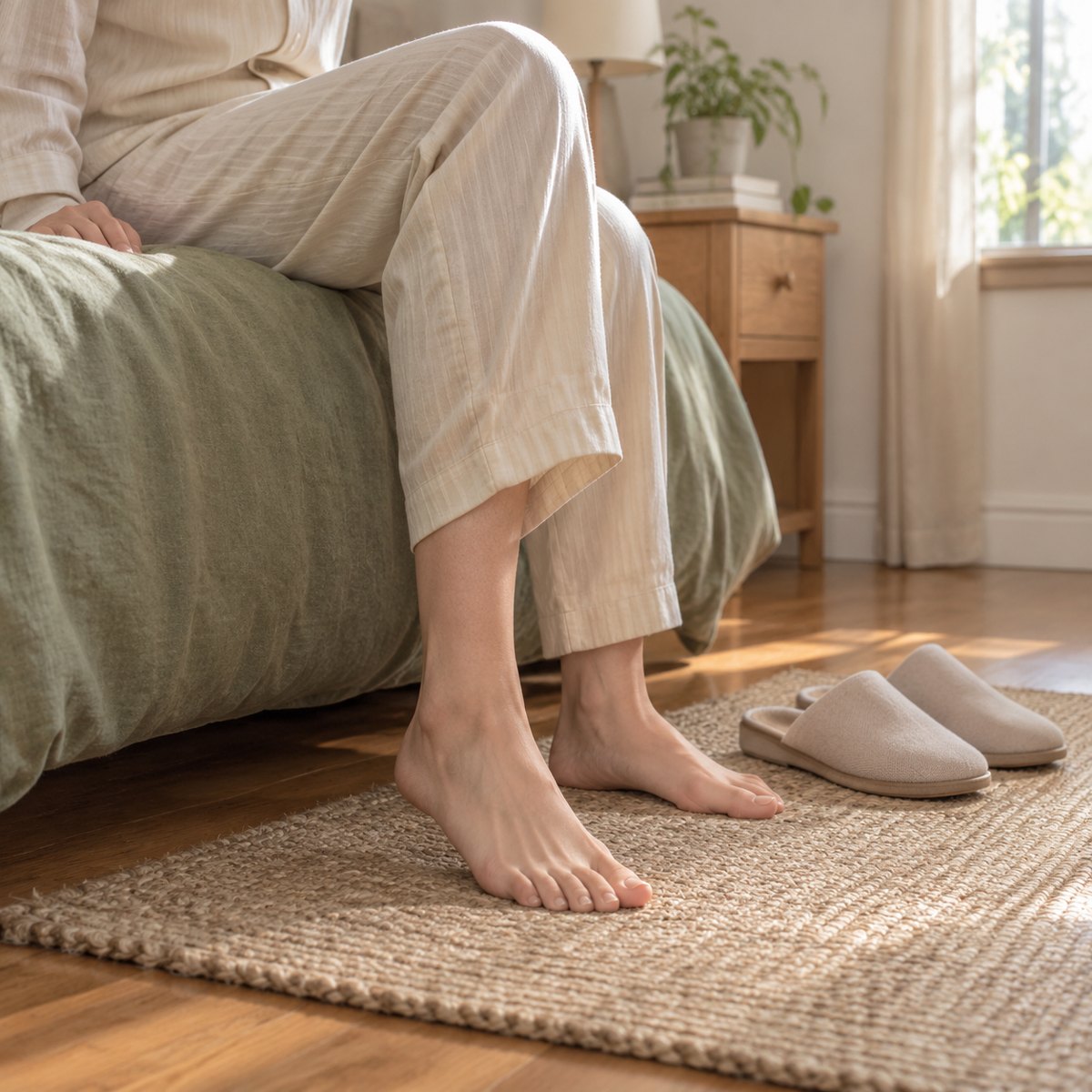
The alarm goes off, you put your feet on the floor, and the first few steps bring a sharp reminder from your heel. A few minutes later, it feels easier. Does that mean the problem has passed, or does the timing tell you something worth checking?
Pain after rest can offer a useful clue. It cannot identify the cause on its own. Before choosing a new shoe or insert, pay attention to where the discomfort starts, how it changes, and whether anything else is happening.
What the first-step pattern can suggest
The plantar fascia is tissue running along the bottom of the foot from the heel toward the toes. According to the American Academy of Orthopaedic Surgeons (AAOS), plantar fasciitis commonly causes pain beneath the heel with the first steps after sleep or a long rest. It may ease after several minutes of walking. Pain can also be greater after activity. [1]
That makes timing worth mentioning at an appointment. It does not make every sore morning heel a case of plantar fasciitis. AAOS describes an examination that also considers other causes, including a heel stress fracture or nerve problem. [1]
Notice the location, not just the intensity
Underneath the heel and behind the heel are different descriptions. NHS guidance associates back-of-heel discomfort extending into the ankle or calf with possible Achilles tendon problems. Redness, swelling, and a dull heel ache can occur with bursitis. These are examples of overlapping symptoms, not a way to diagnose yourself. [2]
Use ordinary words to describe what you feel. You might say, “It is underneath my right heel when I get out of bed,” or, “It is behind my heel after I sit at my desk.” You do not need to know an anatomical term to give a clear account.
Make a short record for your appointment
Keep a note on your phone with the start date, the affected foot, and the spot that hurts. Record whether the discomfort follows sleep, sitting, exercise, or an injury. Add what happens later in the day rather than recording only the first few steps.
Include recent changes such as a longer walking route, a different workout, or new shoes. Keep the observation separate from the explanation: “I noticed it the morning after a long walk” reports the sequence without proving the walk caused it.
One brief entry can be enough to organize your questions. You might ask what could explain the pattern, whether your normal activity needs adjusting, and which changes are appropriate before your next visit.
Keep the morning routine comfortable
For plantar fasciitis, NHS self-care guidance includes limiting long periods of standing or walking, wearing shoes with cushioned heels and arch support, and avoiding barefoot walking on hard floors. It also discusses insoles or heel pads. General guidance cannot establish which option suits your particular symptoms. [3]
Think of the route from your bed to the kitchen as part of your footwear day. Bring that everyday detail into the conversation with your clinician instead of judging the problem only by how you feel in your outdoor shoes.
When to seek medical advice
Get urgent medical assessment for severe heel pain after an injury, a snap or pop at the time of injury, a visibly misshapen foot or ankle, or an inability to walk. Arrange medical advice for worsening or recurring pain, pain that limits normal activities, tingling or lost sensation, or no improvement after two weeks of home care. If you have diabetes and heel pain, seek advice without waiting through that period. [2]
The two-week point is a reason to seek advice if things are not improving; it is not a requirement to wait when symptoms are concerning.
Where an insole fits into the conversation
An insert cannot tell you why your heel hurts. If footwear support is appropriate for you, the RooRuns everyday model is one design to discuss: it has a full-length outline, a contoured arch, a shaped heel cup, and layered cushioning. These describe its construction; they do not establish that it treats your symptoms.

View the RooRuns everyday insole's photographs and current size options.
Educational information from RooRuns; not an individual diagnosis or a medically reviewed treatment recommendation.
Sources
[1] American Academy of Orthopaedic Surgeons, Plantar Fasciitis and Bone Spurs.
[2] NHS, Heel pain.
[3] NHS, Plantar fasciitis.
Sources consulted November 20, 2026.