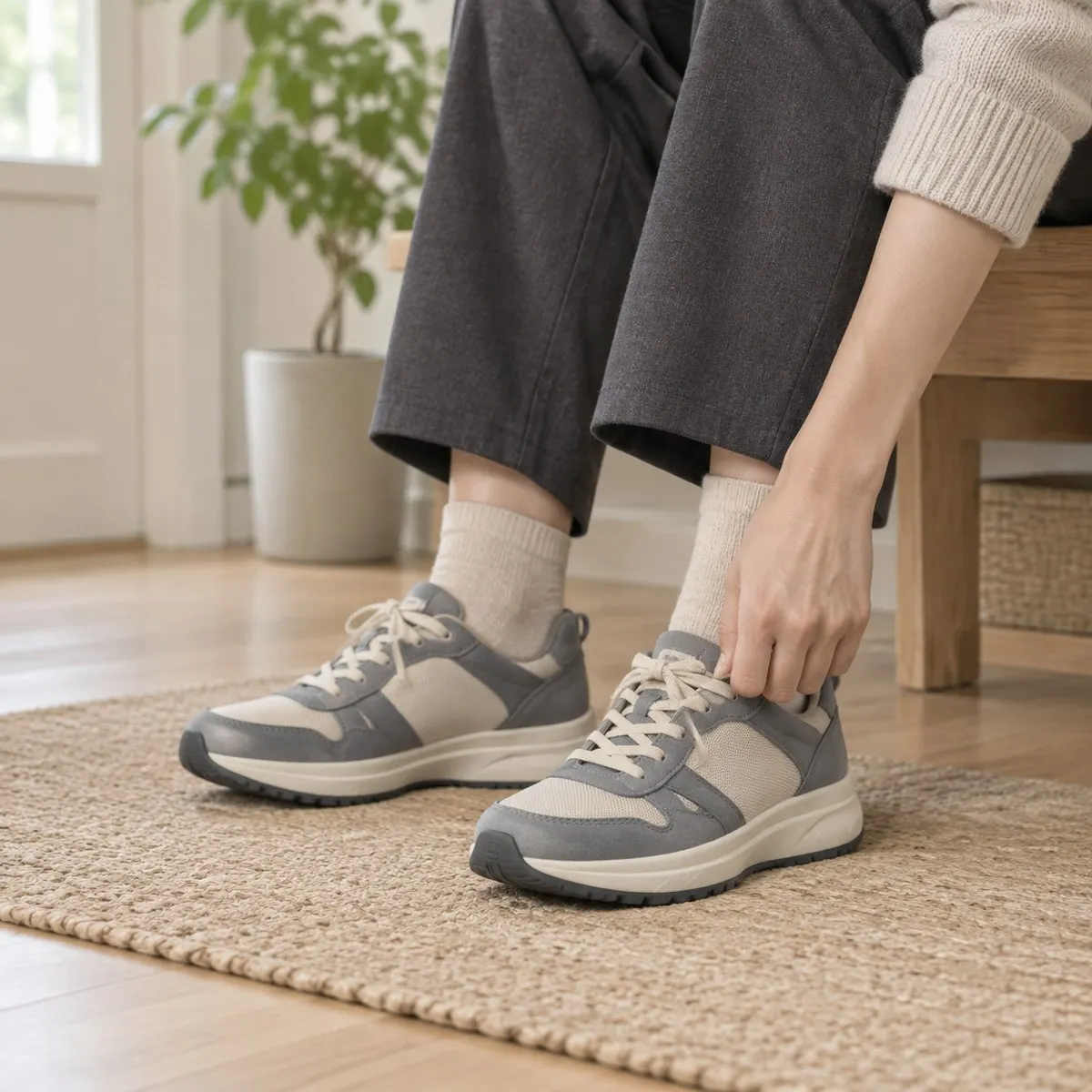
You notice your arch in a photograph, or someone points out how little space sits beneath the inside of your foot. Should you change your shoes, buy an insert, or make an appointment? Start with a more useful question: has this always been your foot shape, or has something changed?
A low-looking arch alone does not explain how a foot feels or functions. This guide focuses on adult flat feet, the difference between a familiar shape and a new change, and the questions to bring to a healthcare professional.
A flat arch does not always need treatment
Flat feet describe a foot shape with little or no inner arch when standing. Many people have no pain or difficulty with everyday activities. NHS guidance says flat feet that cause no problems do not need treatment and should not stop someone participating in sports. [1]
That makes a different starting point from judging your feet against an ideal-looking outline. If the shape is familiar and your feet are comfortable, appearance alone is not a reason to assume something needs correcting. Keep the conversation about what you can comfortably do, rather than how high an arch looks.
A new change deserves a closer look
Some people never develop a pronounced arch; others develop flatter feet later. MedlinePlus explains that aging, injury, or illness can affect the tendons and lead to a change in an already developed arch, sometimes on only one side. Persistent foot pain warrants professional advice. [2]
AAOS describes progressive collapsing foot deformity, a condition involving the structures that support the arch. Symptoms can include pain or swelling along the inner foot and ankle and weakness during activity. Pain can appear before a visible change in shape. This is one possible condition a clinician considers, not a diagnosis you can make from a photograph. [3]
Describe the change in ordinary language
Before an appointment, write down whether you have noticed this shape for years or only recently. Say whether it affects one foot or both. Add where discomfort occurs and what has become difficult: a usual walk, standing at the kitchen counter, or getting through your workday.
You might say, “My left arch looks lower than it used to, and the inside of that ankle aches.” That gives the clinician a clearer starting point than arriving with a self-assigned diagnosis. Mention an injury or a recent change in activity without assuming it proves the cause.
Know when to arrange an assessment
Arrange medical advice if flat feet are newly developed, affect only one foot, or come with pain, stiffness, weakness, numbness, repeated injuries, or walking or balance difficulties. These are reasons for assessment in NHS guidance. [1]
An examination considers more than a footprint. AAOS describes reviewing symptoms, checking the foot while standing, and assessing flexibility and tendon function; imaging may be appropriate. [3] Let the clinician guide any movement tests rather than forcing a painful position to check yourself.
Ask what support is meant to achieve
When flat feet cause symptoms, a foot specialist may discuss comfortable footwear, inserts, or exercises. NHS guidance distinguishes help with pain or stiffness from changing the shape of the feet. [1] AAOS also notes that an off-the-shelf orthotic may suit some mild cases, while others need custom support or bracing. [3]
A useful question is, “What are we trying to improve, and how will we judge whether this option helps?” Bring the shoes you normally wear and ask which features matter for your situation.
One insert to inspect if support is appropriate
The RooRuns FitFeet three-quarter insert has firm EVA construction, a fabric-covered top, a defined arch contour, and a shaped heel cup. Its current size selector lists S through XL with separate men's and women's ranges. These identify one available design; they do not establish that it treats a painful or newly changing arch.

View the RooRuns FitFeet insert's photographs and current size options.
Educational information from RooRuns; not an individual diagnosis or a medically reviewed treatment recommendation.
Sources
[1] NHS, Flat feet. [2] MedlinePlus, U.S. National Library of Medicine, Flat feet. [3] American Academy of Orthopaedic Surgeons, Progressive Collapsing Foot Deformity (Flatfoot). Sources consulted November 27, 2026.